
Hours of Service
HOS pilots are not a new hours clock — what changes before 2027
Two FMCSA hours-of-service pilots wrapped small pre-tests this summer; the full 2027 launch is a study, not a new clock on a Midwest dry-van.
PRIDEUSA
Hours of service, revoked ELDs, CDL and English-language OOS, medical cards, Clearinghouse. We read the notice, then say whether it idles a truck out of Lake Bluff or leaves the quote alone.
Two FMCSA hours-of-service pilots wrapped small pre-tests this summer; the full 2027 launch is a study, not a new clock on a Midwest dry-van.
USDOT and a 21-state coalition are in court over who can see CDL records; for an Illinois carrier, the job is still verifying the person we hire.
Steve Dowling joined FMCSA as Chief Safety Officer on August 10, 2026, with 35-plus years cited; the scale questions do not change overnight.
FMCSA is converting English-language proficiency from guidance into a rule so a future memo cannot quietly unwind roadside practice at the scale.

FMCSA revoked five ELDs on August 6, 2026; carriers have until October 6 to swap, and after that a revoked unit is treated as no ELD at all.
USDOT rolled out a National Roadway Safety Strategy on August 5, 2026 — an interagency plan, not a fuel surcharge or a dry-van tariff for shippers.
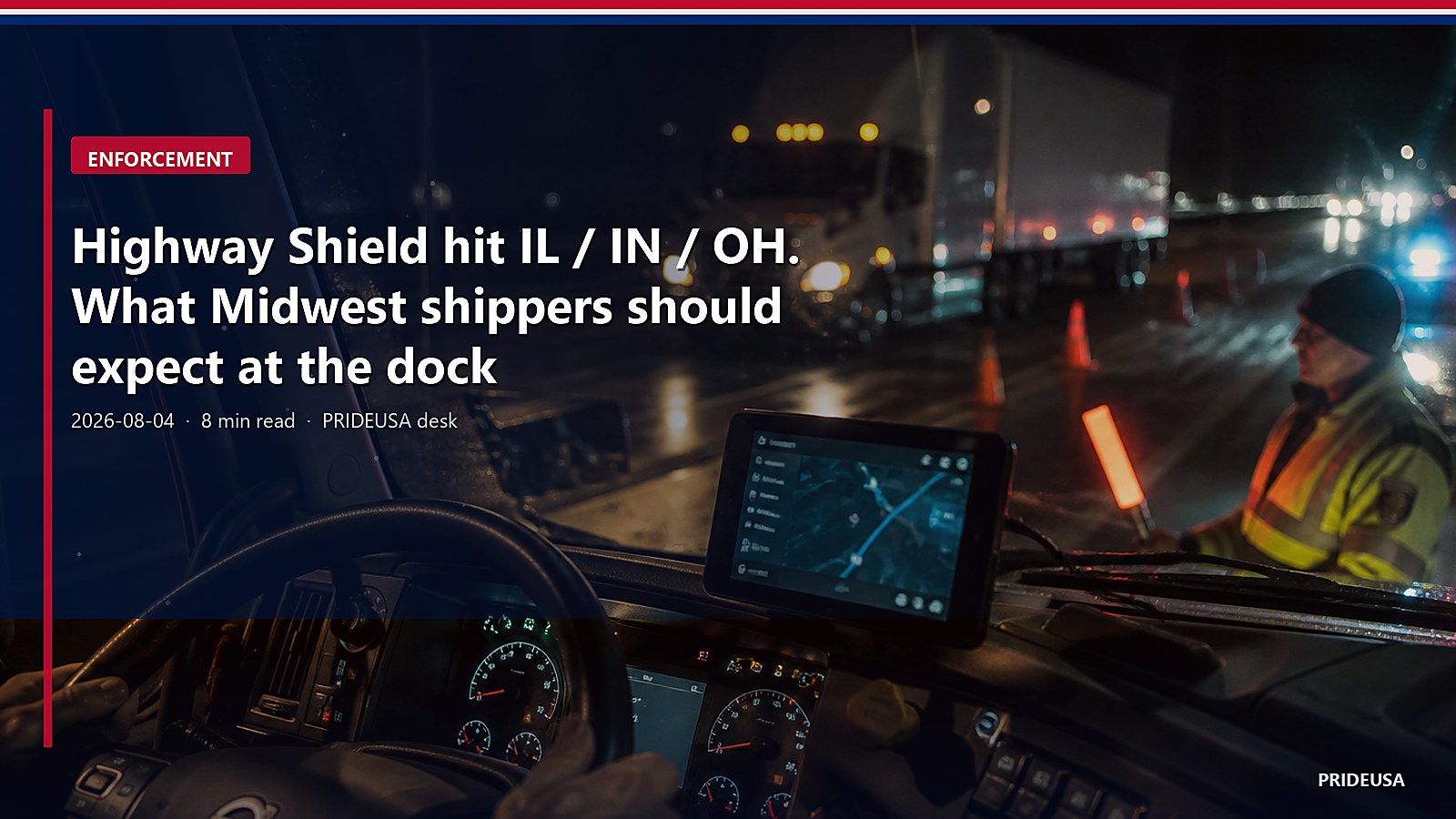
The second Highway Shield wave targeted corridors in Illinois, Indiana, Iowa, and Ohio — more roadside time, not a reason to panic a legal truck.
The White House kickoff for Freedom Haulers aims to put more veterans in commercial trucks; we will interview, and we will not skip the file.
USDOT and HSI are investigating about 75 entry-level CDL schools for fake certifications; nearly 10,000 providers are already off the registry.
July 9, 2026 pulled ten ELDs with a September 8 drop-dead — late-summer 2026 was not a quiet logger year if you were still shopping clones then.
FMCSA tightened ELD registration so revoked devices cannot sneak back onto the list; shop that list, keep the identifier, skip the Facebook ad.
FMCSA said 79 devices had left the registered list since January 2025; that year statistic cannot put you out of service — only your identifier can.
FMCSA pulled twelve ELDs for Appendix A failures, with a July 20, 2026 drop-dead; 79 devices had already left the registered list since January 2025.
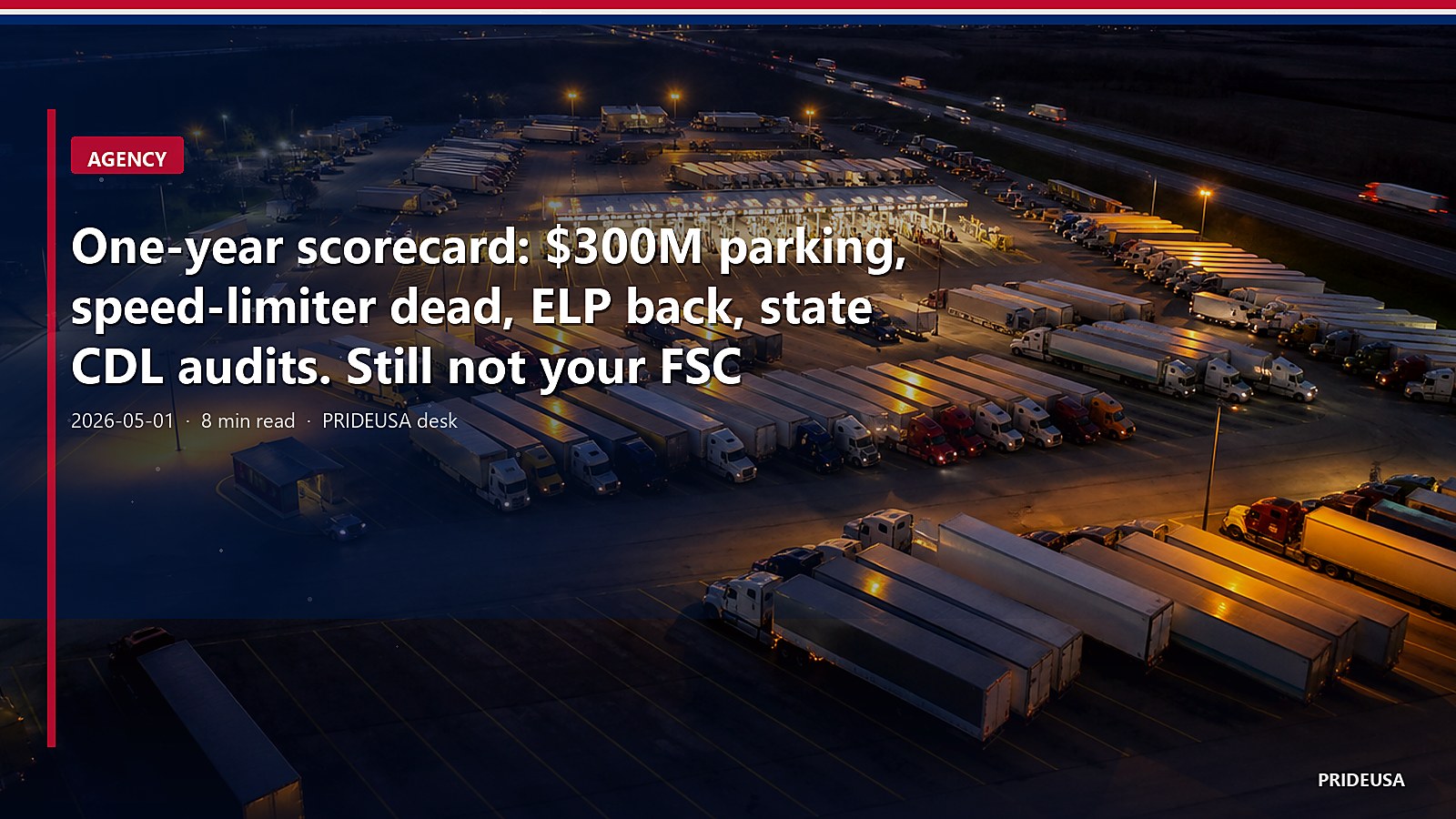
USDOT’s May 1, 2026 scorecard recapped $300 million-plus in parking grants, ELP out-of-service, and state CDL audits — a table of contents, not a surcharge.
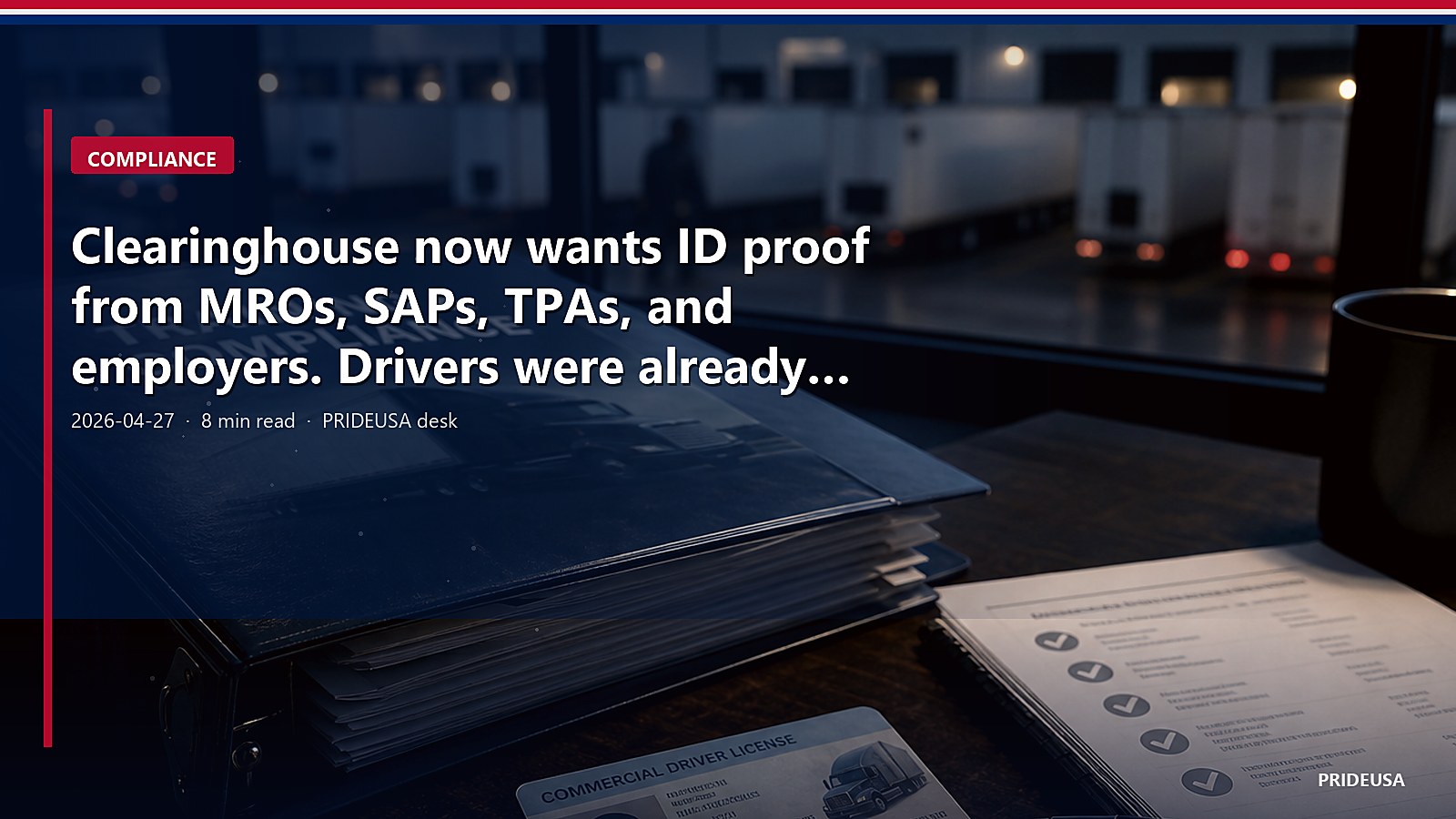
On April 27, 2026, FMCSA added IDEMIA identity checks for MROs, SAPs, TPAs, and employers in the Clearinghouse; CDL holders were already state-verified.
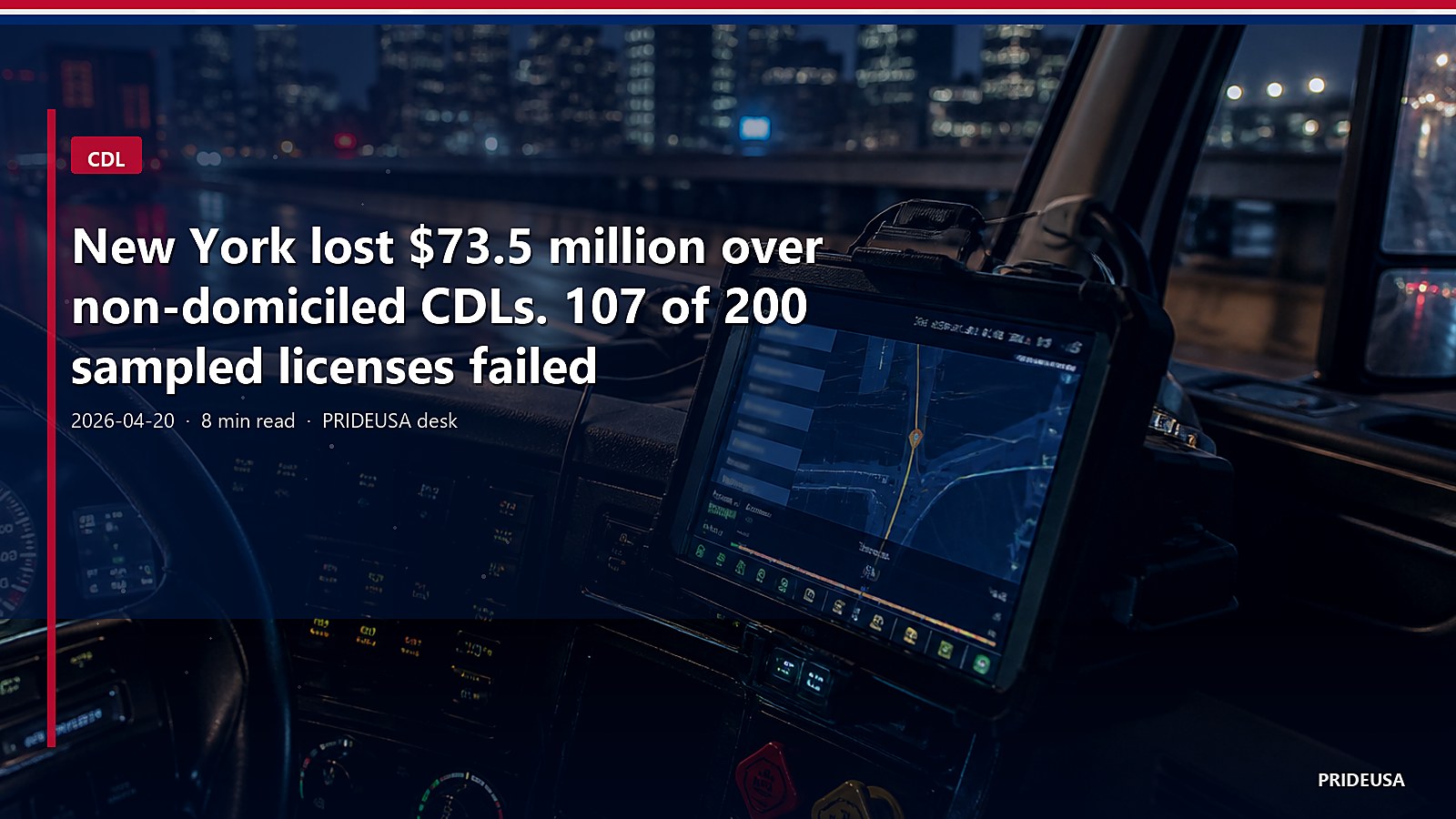
FMCSA withheld $73,502,543 from New York after an audit found 107 of 200 sampled non-domiciled licenses in violation — a DMV file, not a pickup ban.
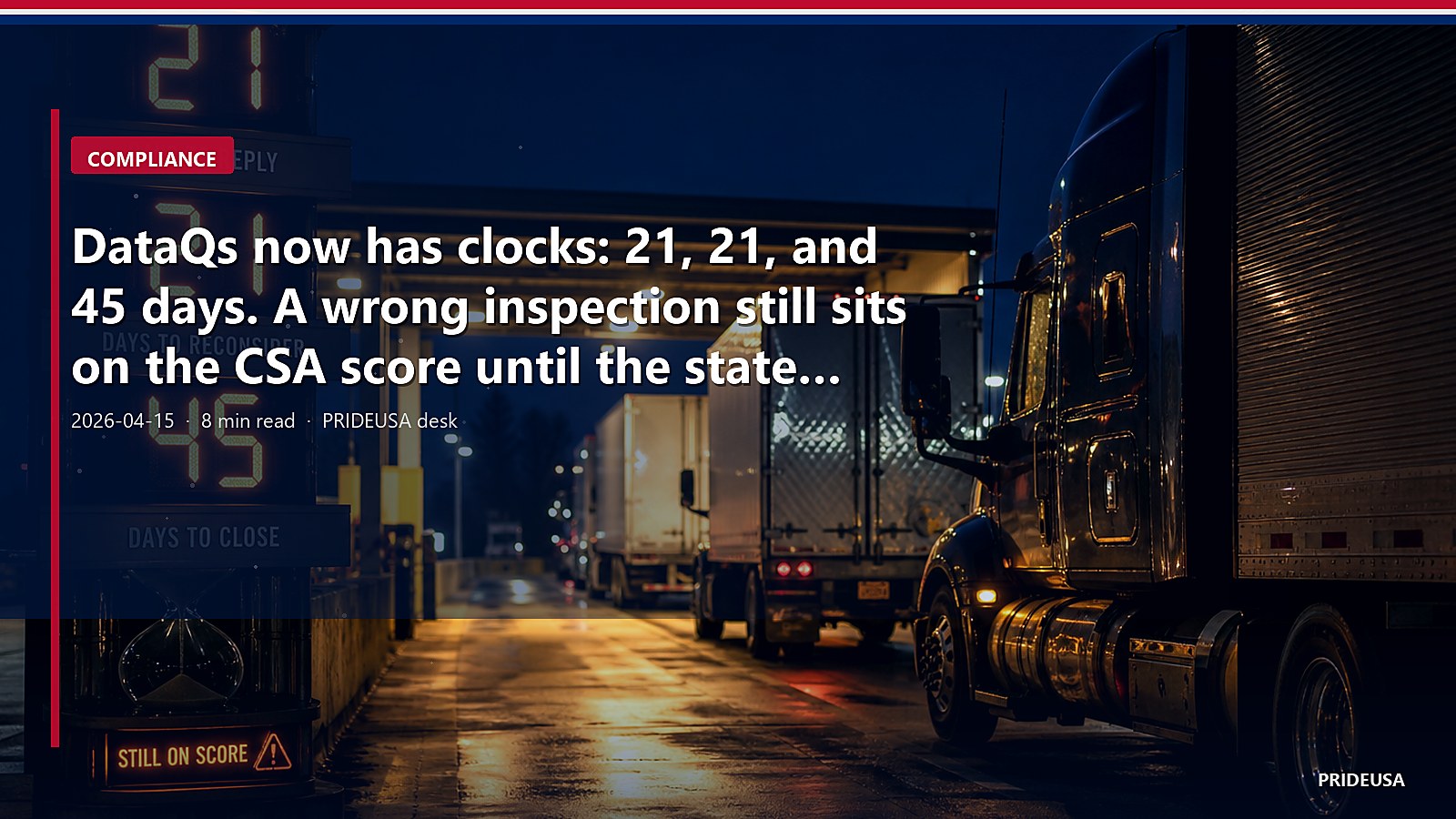
As of April 15, 2026, MCSAP states have DataQs clocks of 21, 21, and 45 days; a wrong inspection still sits on the CSA score until the state grants review.
NRII’s last phase posts medical exam results from certified examiners to the National Registry and state DMVs, so a crumpled MCSA-5876 is no longer the record.
A paper medical card still counts through October 11, 2026, for up to 60 days after it is issued; after that, do not bet the truck on a photocopy.
FMCSA revoked HERO ELD on April 2, 2026 for failing Appendix A; after the June 2 deadline that identifier was legally nothing and a 395.8(a)(1) sit.
Phase one of NCCDB modernization adds property-broker complaint categories at nccdb.fmcsa.dot.gov; it is a federal inbox, not a Google review.
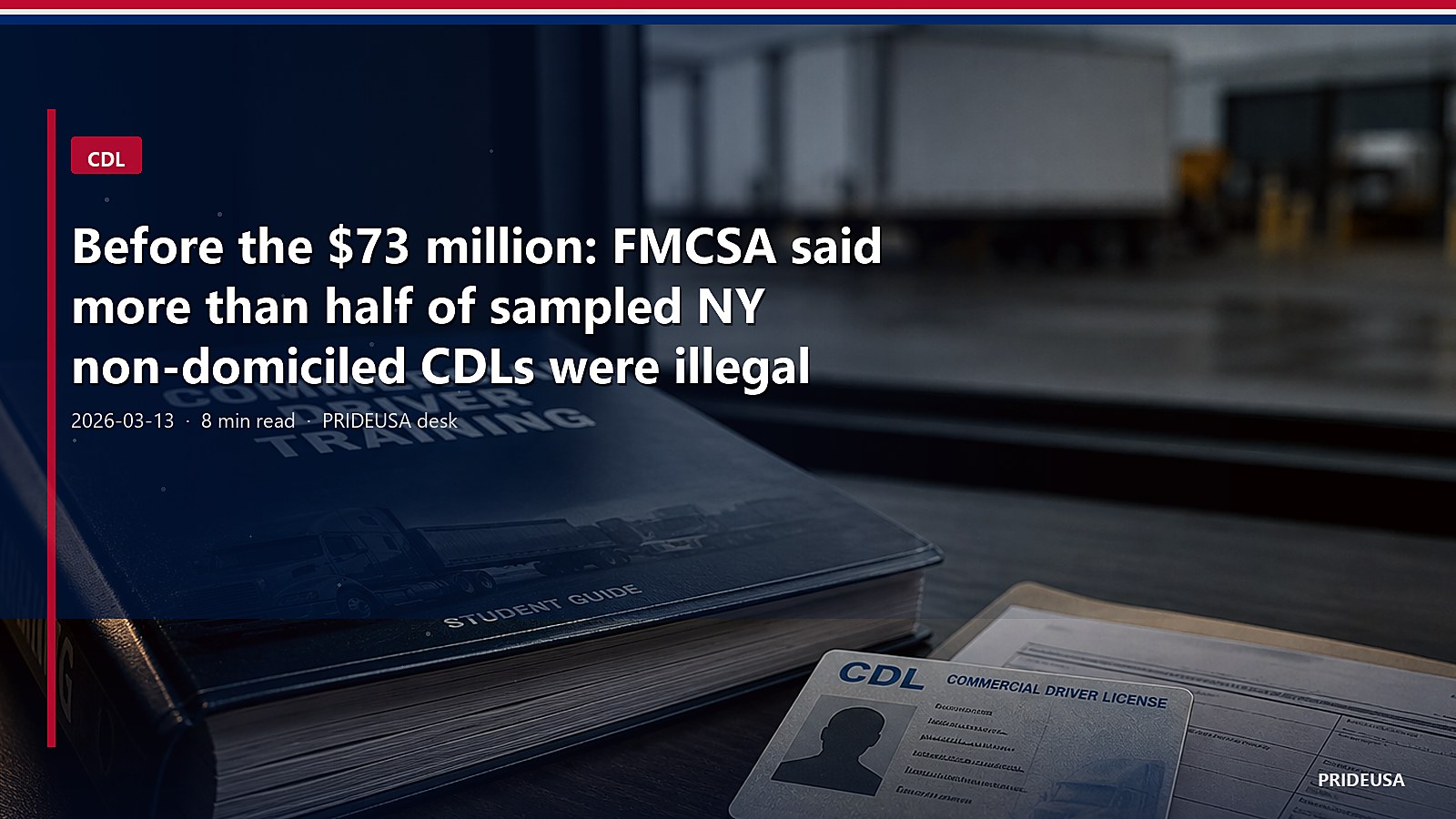
Before the $73 million withhold, FMCSA said more than half of sampled New York non-domiciled CDLs were illegal, citing an eight-year default.
Fourteen ELDs left the registered list with a May 4, 2026 drop-dead date; after that, a revoked unit was treated as no ELD and out of service.
Nine ELDs, including Global and ELD365 among the names, left the registered list with an April 14, 2026 deadline — 2026’s first purge invoice.
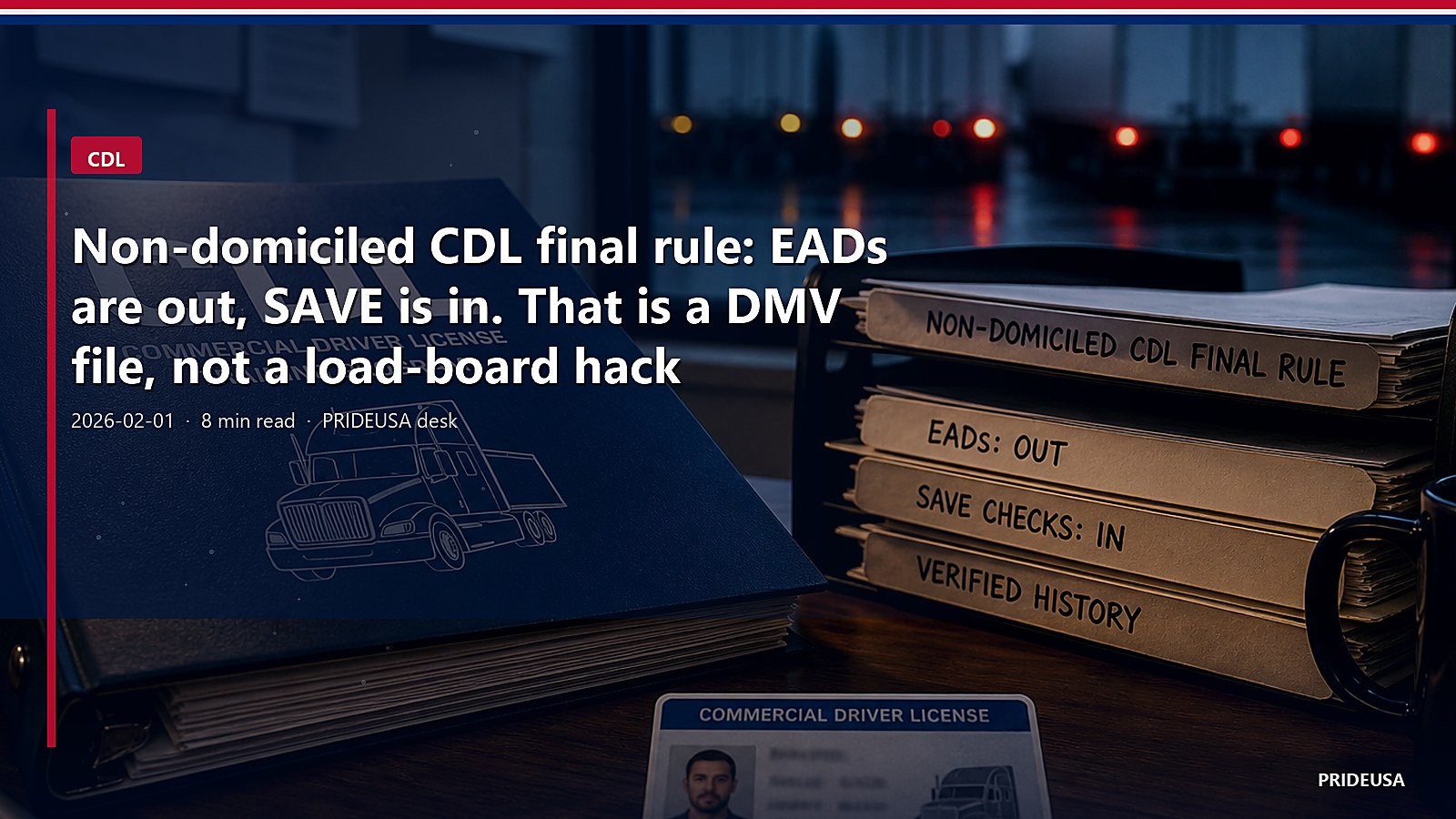
The final non-domiciled CDL rule drops EADs, requires SAVE checks and a verified history — a DMV issuance file, not a load-board workaround.
If a broker says California lost $200 million, split about $160 million in CDL highway funds from about $40 million in ELP MCSAP — two files.
California’s January 2026 withhold of about $160 million is the non-domiciled CDL file — not the October 2025 MCSAP action of about $40 million.
SafeDRIVE wave one logged 8,215 inspections, 704 driver OOS, 1,231 trucks OOS, and 56 arrests across 26 states and D.C., including Illinois.
SafeDRIVE wave one put Illinois on a 26-state list for January 13–15; Highway Shield was a later Midwest corridor wave — do not merge the two.
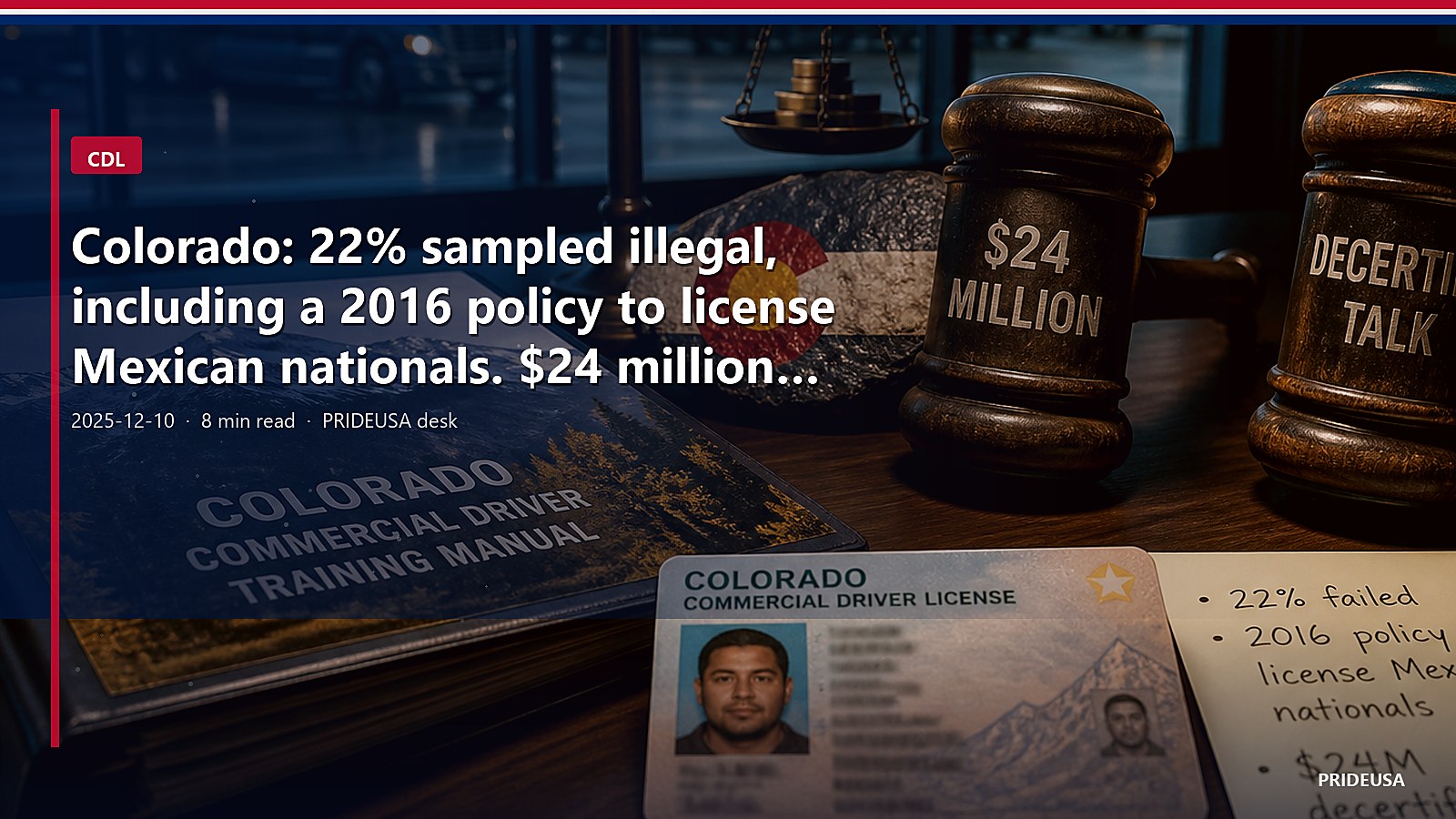
Colorado’s sample failed at about 22 percent, with a 2016 policy on Mexican nationals named; $24 million and decertify talk are the hammers.
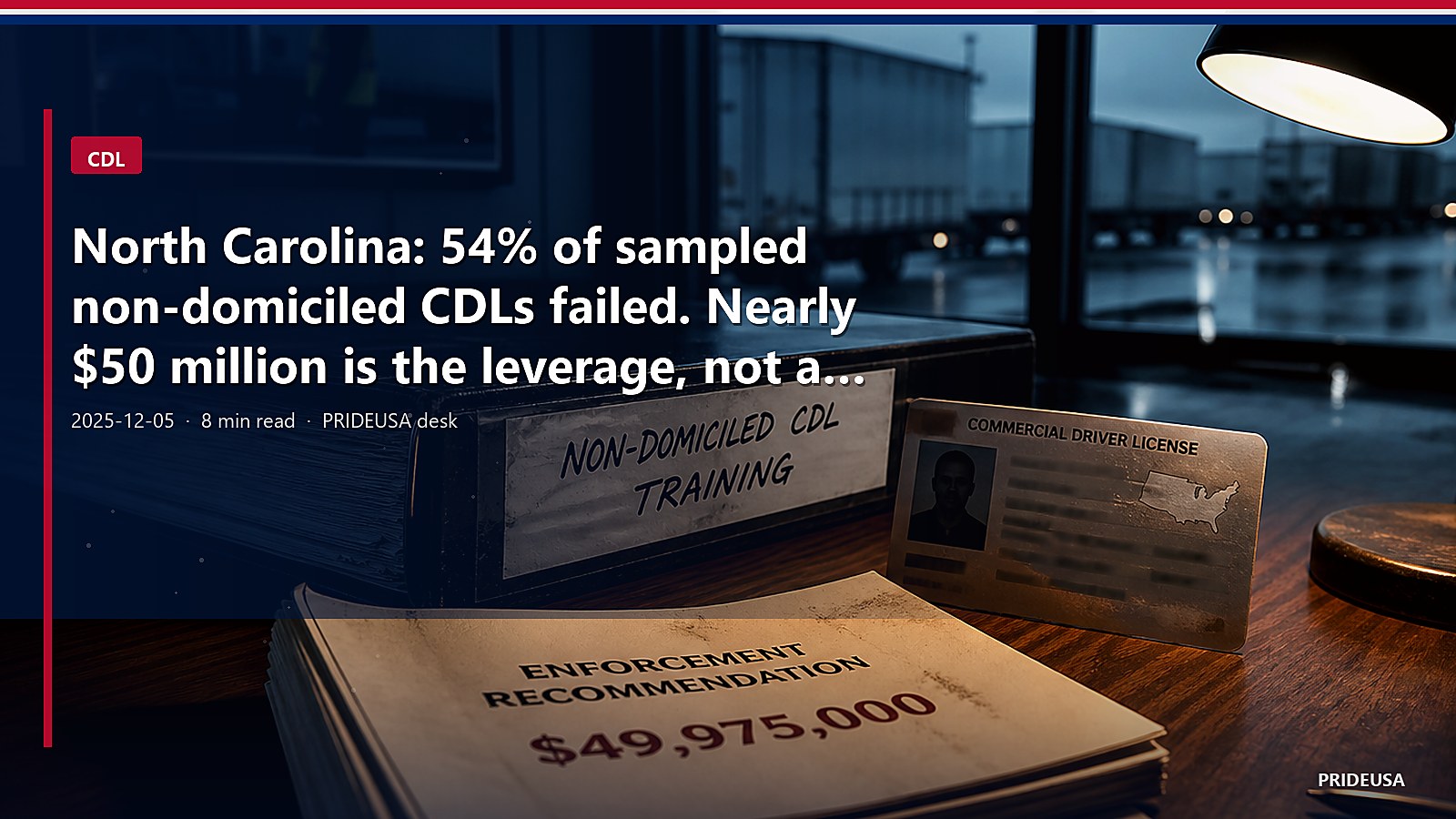
FMCSA said 54 percent of sampled North Carolina non-domiciled CDLs were issued illegally; nearly $50 million is the leverage, not a DAT print.
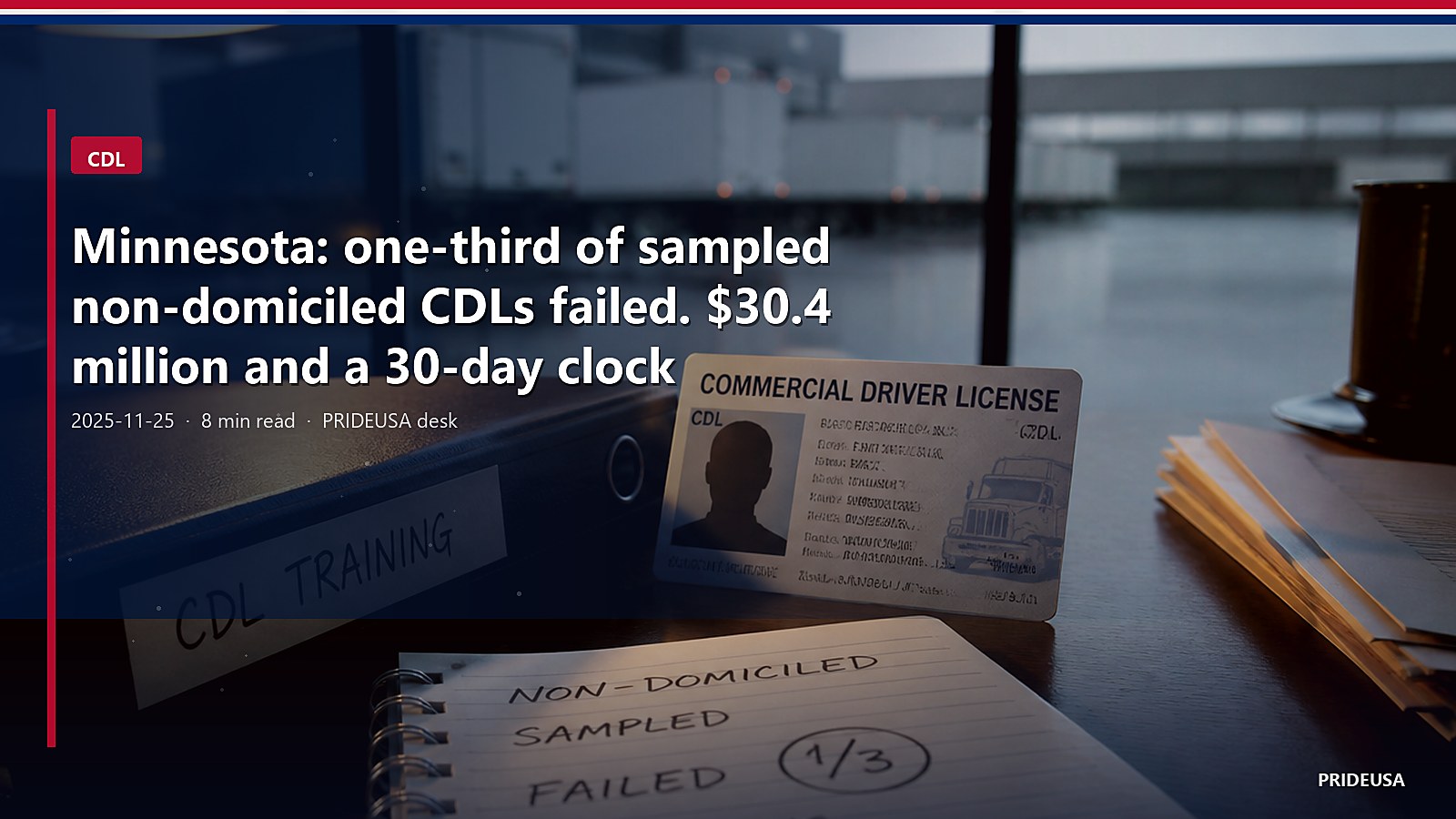
Minnesota’s sampled non-domiciled CDLs failed at about one-third; FMCSA named 30 days and up to $30.4 million if the program does not come clean.
FMCSA told Pennsylvania that nearly $75 million sits on illegal non-domiciled CDLs and CLPs if PennDOT does not revoke and repair the shop this cycle.
November 20, 2025 pulled five ELDs with a January 20, 2026 grace end — a different calendar from the August 2026 five that everyone remembers.
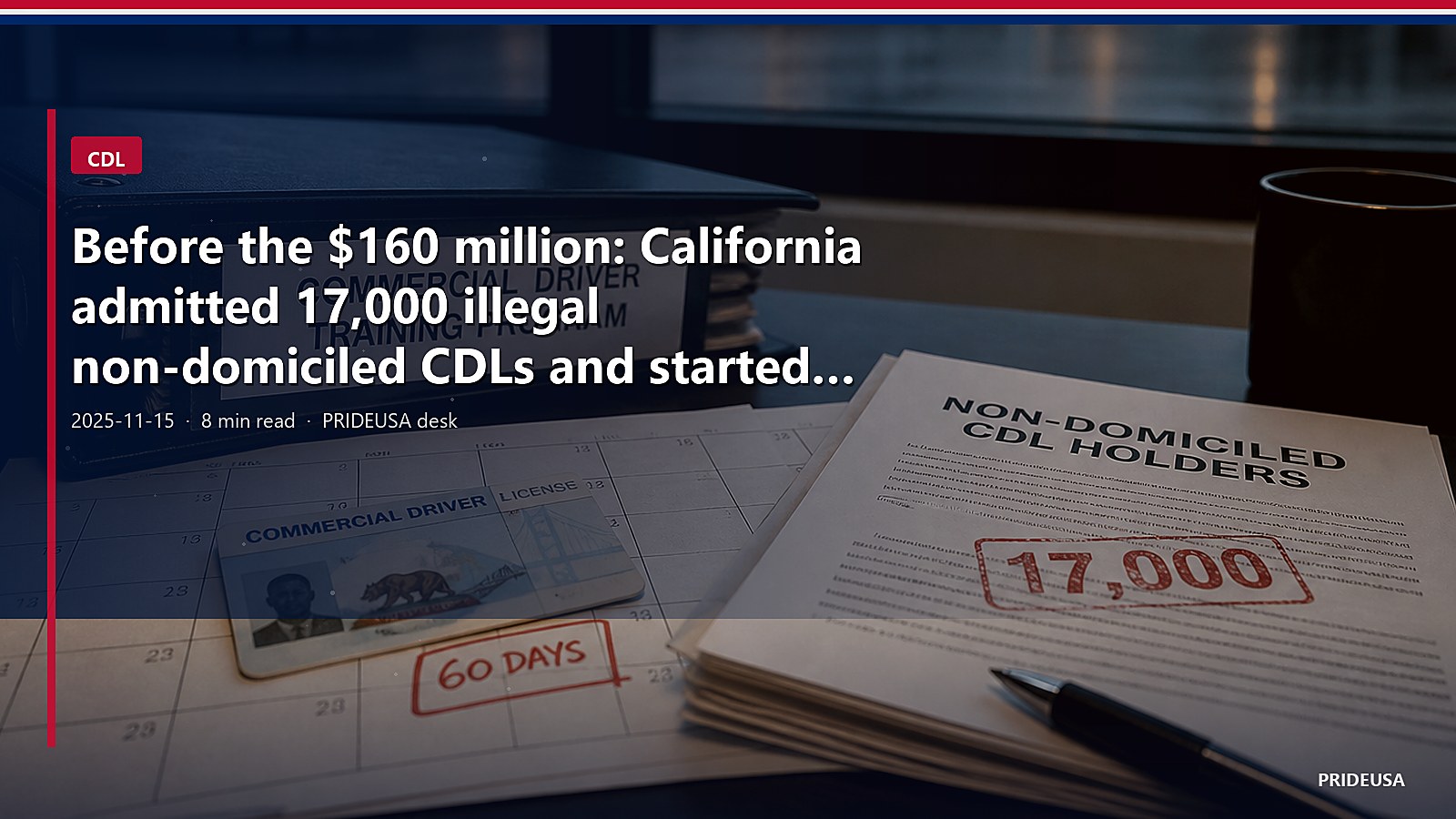
Before the $160 million withhold, California noticed 17,000 non-domiciled CDL holders that their cards would expire in 60 days and fail federal rules.
FMCSA withheld more than $40 million in California MCSAP after October 15, 2025, until the state adopts and actually enforces a compatible ELP standard.
September 2025’s emergency restriction, a November 13 court stay, and the February 2026 final rule are three dates — mash them and a DMV story becomes a rumor.
September 15, 2025 named two HOS pilots — a paused 14-hour window and extra sleeper splits — as a study, not a new legal clock on a Chicago pickup.
USDOT gave California, Washington, and New Mexico 30 days to enforce ELP or face up to 100% MCSAP withholding — a state-funding fight, not an Illinois script.
FMCSA removed nearly 3,000 CDL trainers from the TPR and put about 4,500 more on notice; a dropped school is still not a road-test waiver today.
Read the June 27, 2025 nationwide audit first, then the state chapters; six headlines from Pennsylvania to Colorado are not six federal CDL clocks.
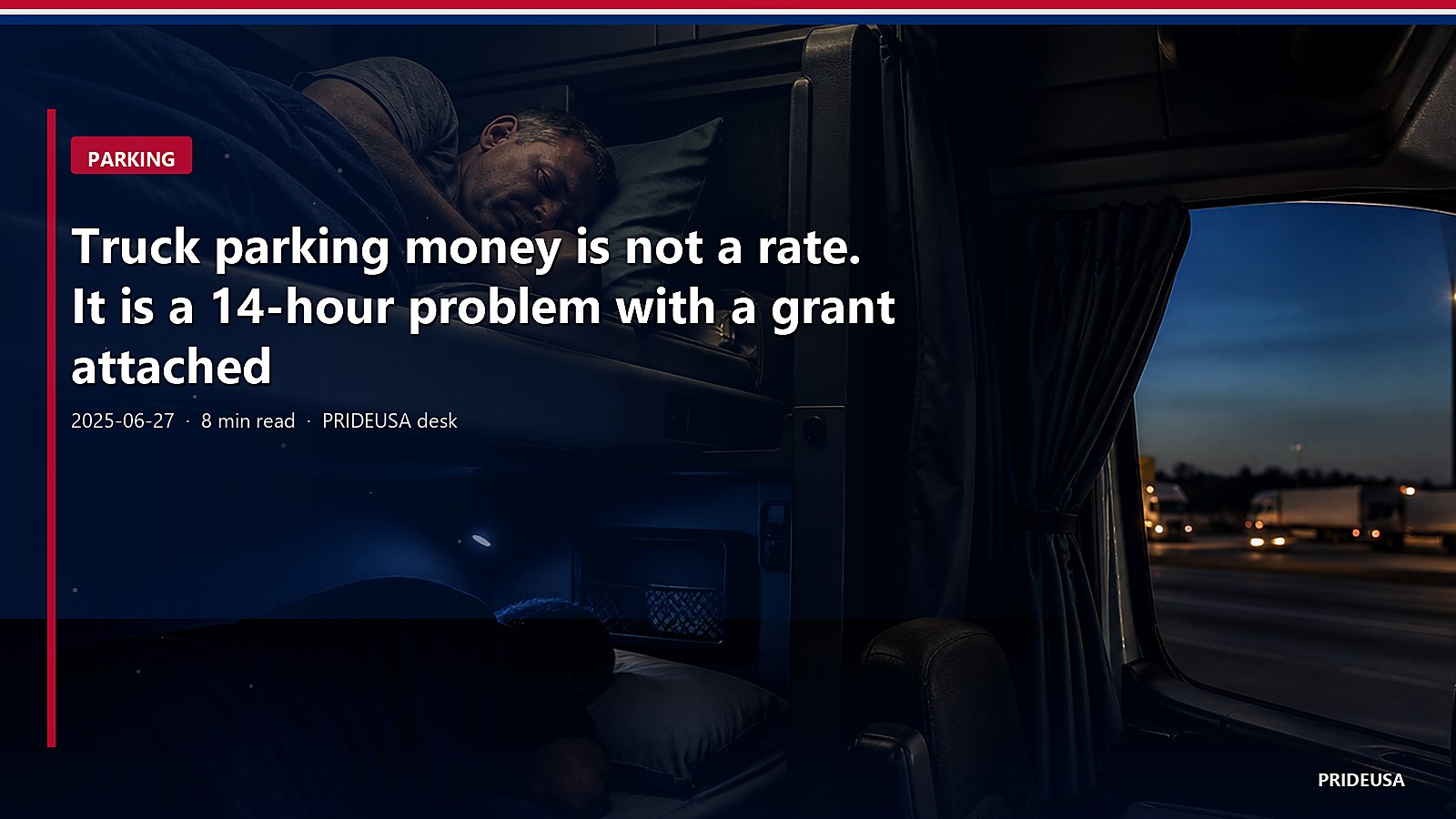
USDOT’s June 2025 parking grants — more than $275 million, including 917 spaces on Florida’s I-4 — do not add a legal lot on Midwest I-80 tonight.
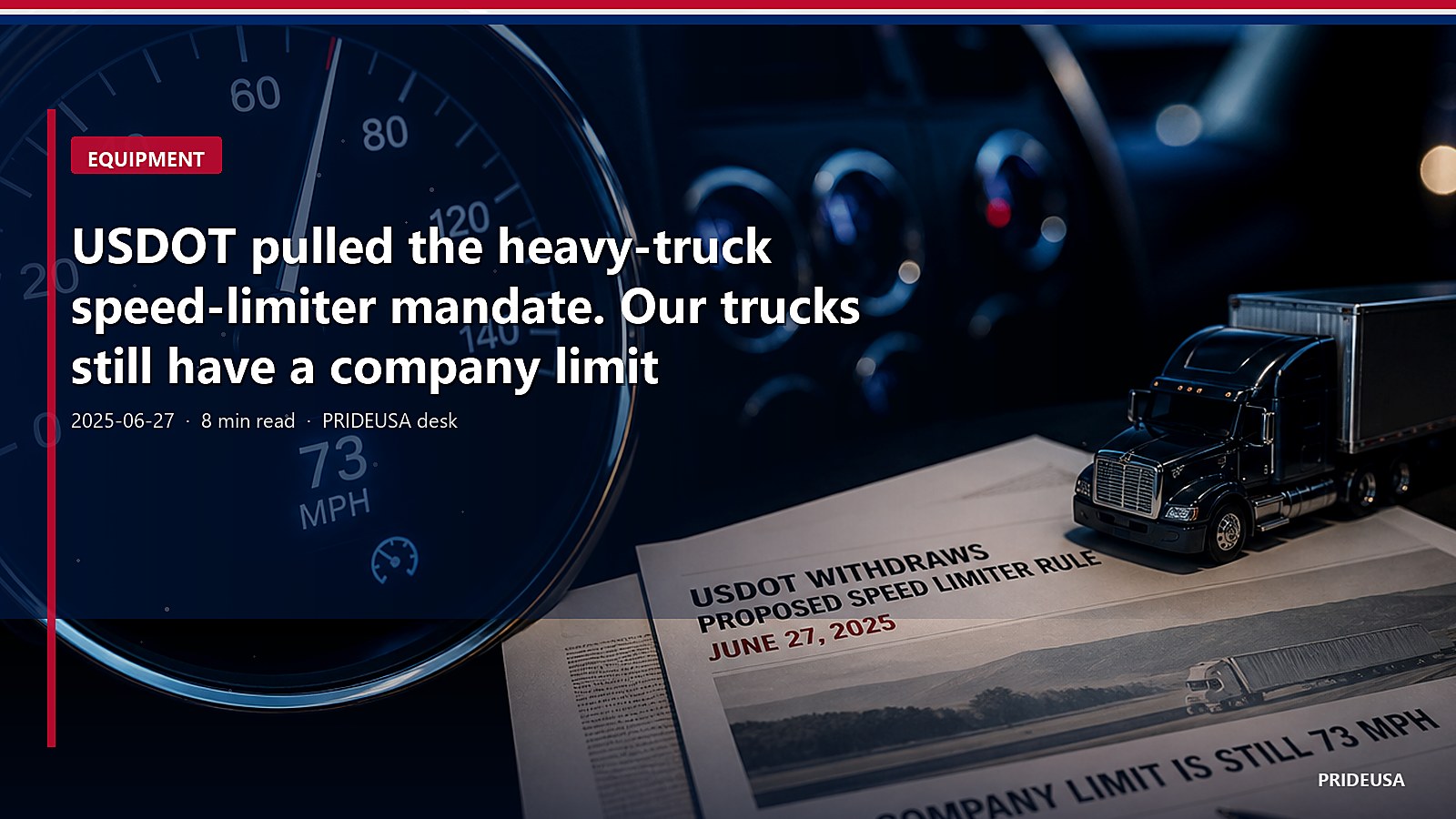
USDOT withdrew the proposed heavy-truck speed-limiter rule on June 27, 2025; our company limit is still 73 mph, and insurance still reads the governor.
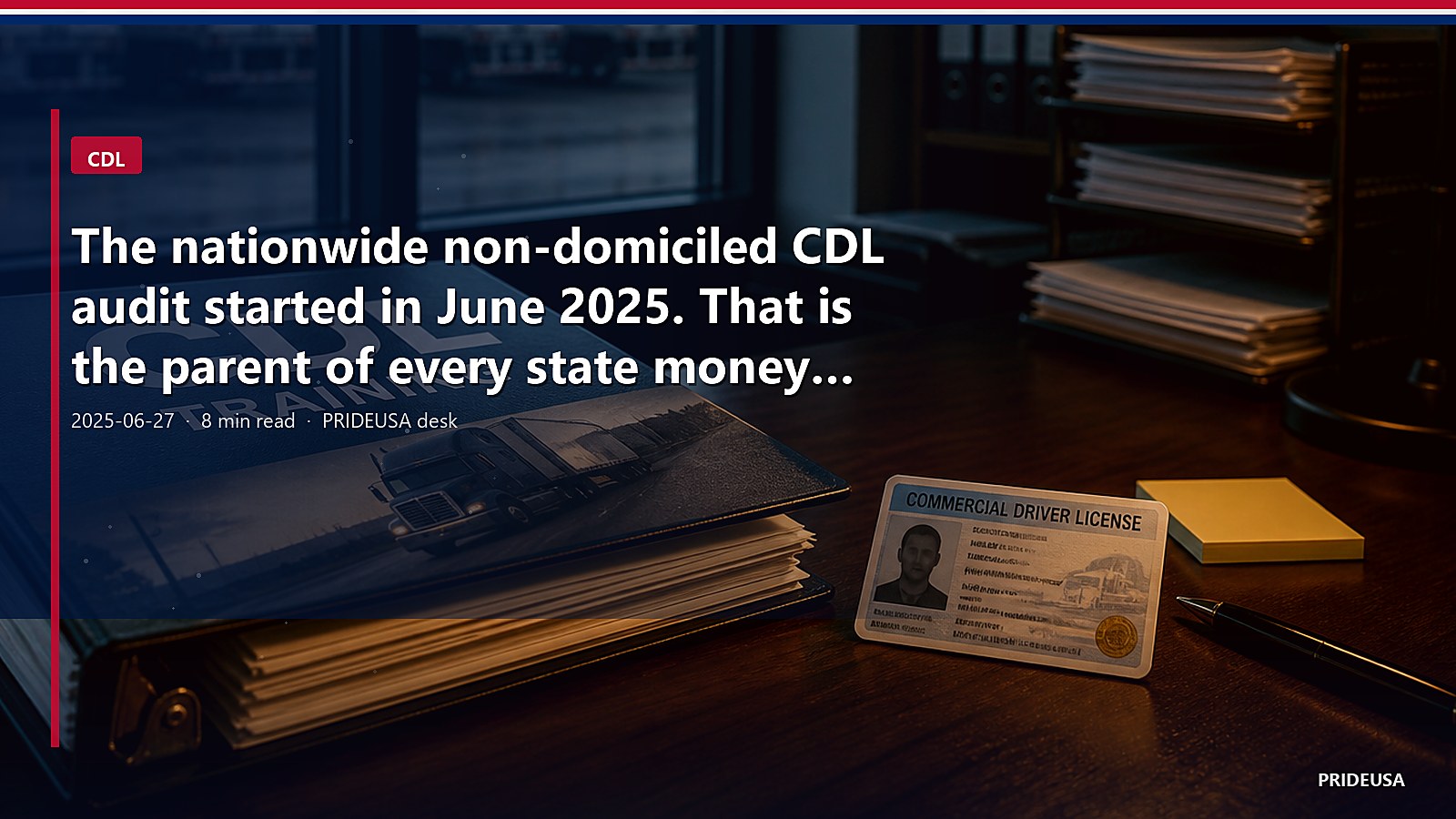
USDOT opened a nationwide review of every state’s non-domiciled CDL shop on June 27, 2025 — the parent file behind later state money stories.
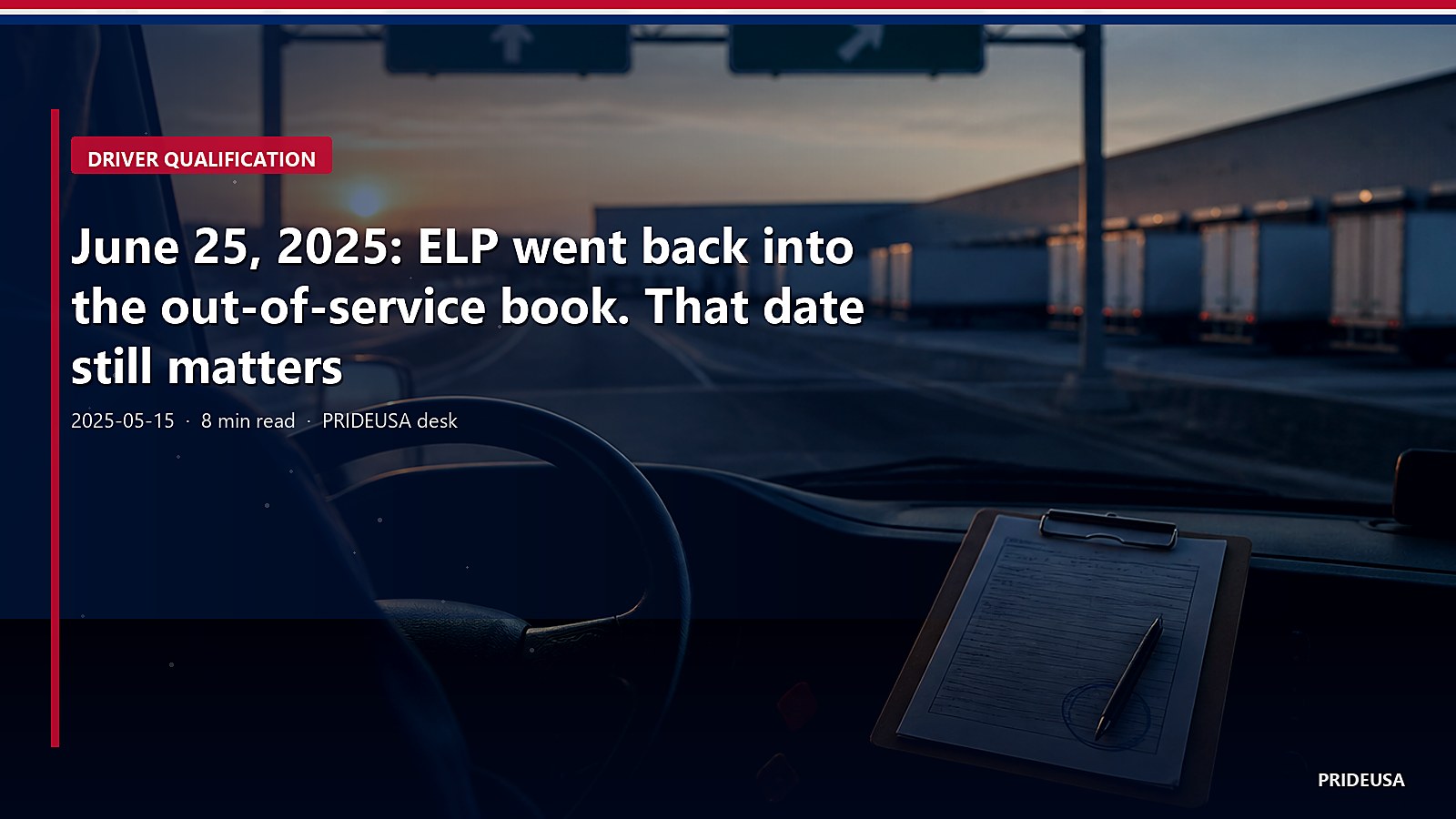
English Language Proficiency went back into CVSA out-of-service criteria on June 25, 2025; the 2026 codify story is the sequel, not a second start date.
Operation Protect Your Move targets hostage household-goods loads and unregistered shops; we haul freight in a 53-foot box, not sofas or apartments.
In April 2025 USDOT directed FMCSA to rescind the 2016 memo that told inspectors not to place drivers out of service for English proficiency.
FY25 High Priority ITD and CMV Safety grants — potentially $90M-plus, due June 20, 2025 — are for states and nonprofits, not a Lake Bluff drop yard.
January 8, 2025 revoked BLUE STAR, ROAD STAR, United, Speed, and two TrackEnsure units; March 9 was the first ELD invoice of that purge year.
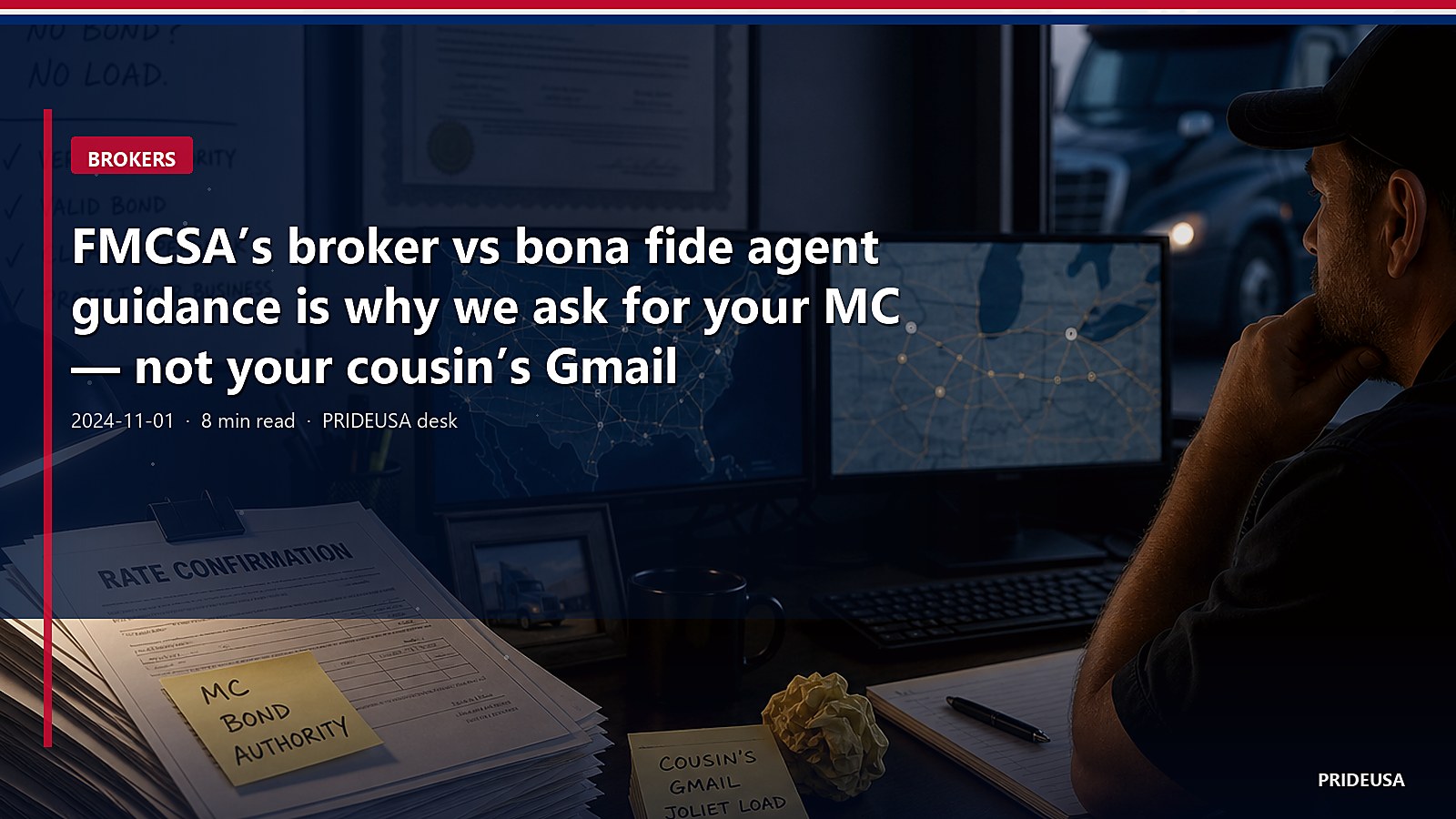
FMCSA’s final guidance on broker versus bona fide agent is why we ask for your MC and the bond — not a cousin’s Gmail and a Joliet load on a handshake.
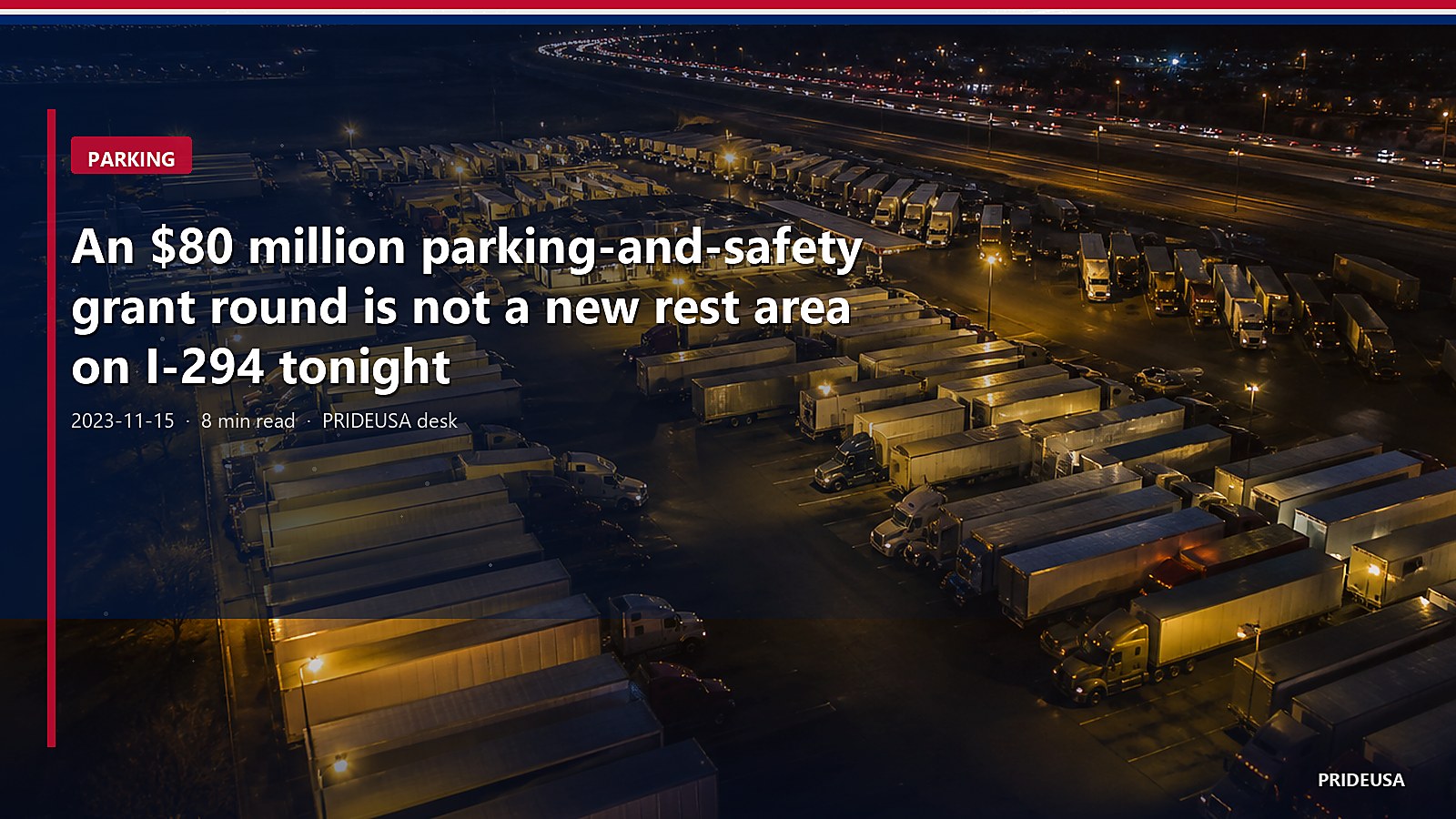
FMCSA’s more-than-$80-million High Priority round raised parking-project funding 65 percent; it still did not add an empty stall on I-294 tonight.
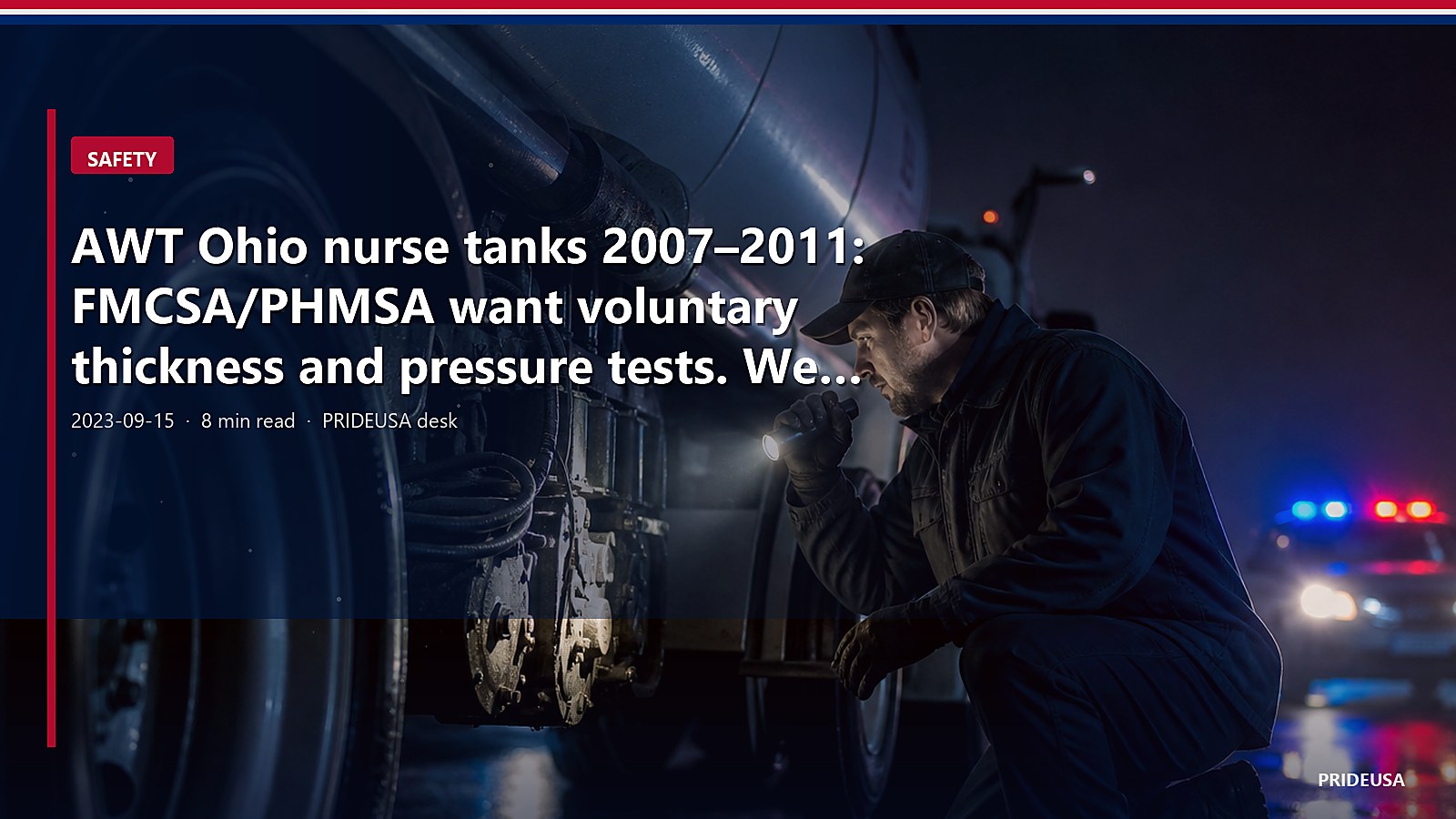
FMCSA and PHMSA asked for voluntary tests on AWT Fremont nurse tanks built 2007–2011; we still do not haul anhydrous ammonia as a product line.
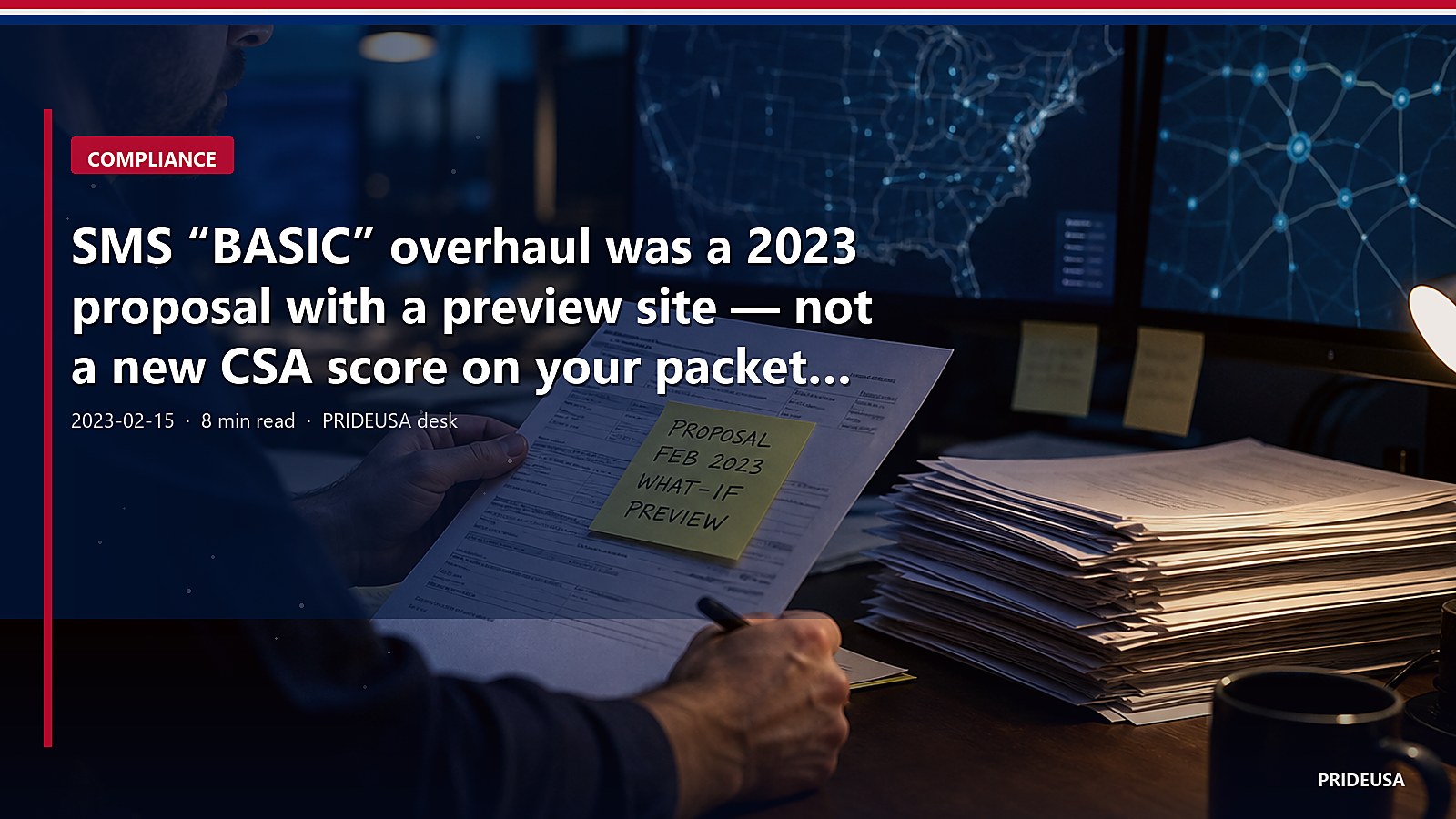
February 2023’s SMS proposal and CSA Prioritization Preview were a what-if — not a new BASIC score sitting on this morning’s broker packet yet.
FMCSA awarded $80,714,223 in High Priority CMV grants for inspections, parking awareness, and crash corridors — still not your fuel surcharge.
A USDOT number identifies a legal person forever and is not for rent; FMCSA will inactivate the number and revoke related registrations if you sell it.
On February 7, 2022, state licensing agencies began checking the Training Provider Registry before the skills test; that gate is still live.
The 2020 HOS rewrite still governs a Midwest dry van: on-duty break, 8/2 or 7/3 sleeper, plus-two adverse driving, and a longer short-haul window.
ELDT slipped from February 7, 2020 to February 7, 2022 because the Training Provider Registry was not built; that two-year delay is now closed.
Clearinghouse registration opened before the January 6, 2020 queries; drivers still need a free account to consent to a full employer search.
FMCSA’s crash-preventability demo reviewed 5,600-plus crashes and found about 94 percent not preventable — that is still not a delete button.
After ELDs hit nearly 99 percent compliance, FMCSA asked how to revise HOS, especially agriculture; that round is the ancestor of 2020, not a 2026 pilot.
April 1, 2018 brought full ELD enforcement and a 10-hour OOS for a missing required logger; agriculture got another 90-day waiver in the same breath.
A 90-day PeopleNet AOBRD integration waiver for Old Dominion and similarly situated fleets is not a license to run a $199 no-name logger today.
Two weeks before December 18, 2017, FMCSA promised ag-waiver and personal-conveyance guidance; the mandate still started on time for dry van.
The 2016 ELDT final rule required proficiency, not a minimum hour count, and a Training Provider Registry — a certificate mill is not a CDL.
The Clearinghouse went live in January 2020 for pre-employment and annual queries; a Facebook screenshot is not a substitute for the database.
Twenty-five stakeholders plus FMCSA reached ELDTAC consensus in 2015; the March 2016 NPRM is why a Training Provider Registry later existed.
The ELD final rule gave paper-log fleets two years, banned harassment-by-device, and allowed phones only if they meet the spec and sit on the list.
FMCSA’s 2015 coercion rule lets drivers report carriers, shippers, receivers, and brokers who push a break of hours, CDL, or testing rules on a load.
Before the Clearinghouse, no single federal well held failed CDL drug tests; the 2014 NPRM named the hole the 2020 database later filled in.

Household-goods brokers faced a $25,000 bond and pre-contract disclosures starting in 2011–2012; PRIDEUSA still will not move your household sofa.
PSP shows five years of crashes and three years of inspections from MCMIS nationwide; we still run it, and it is not the Clearinghouse file.
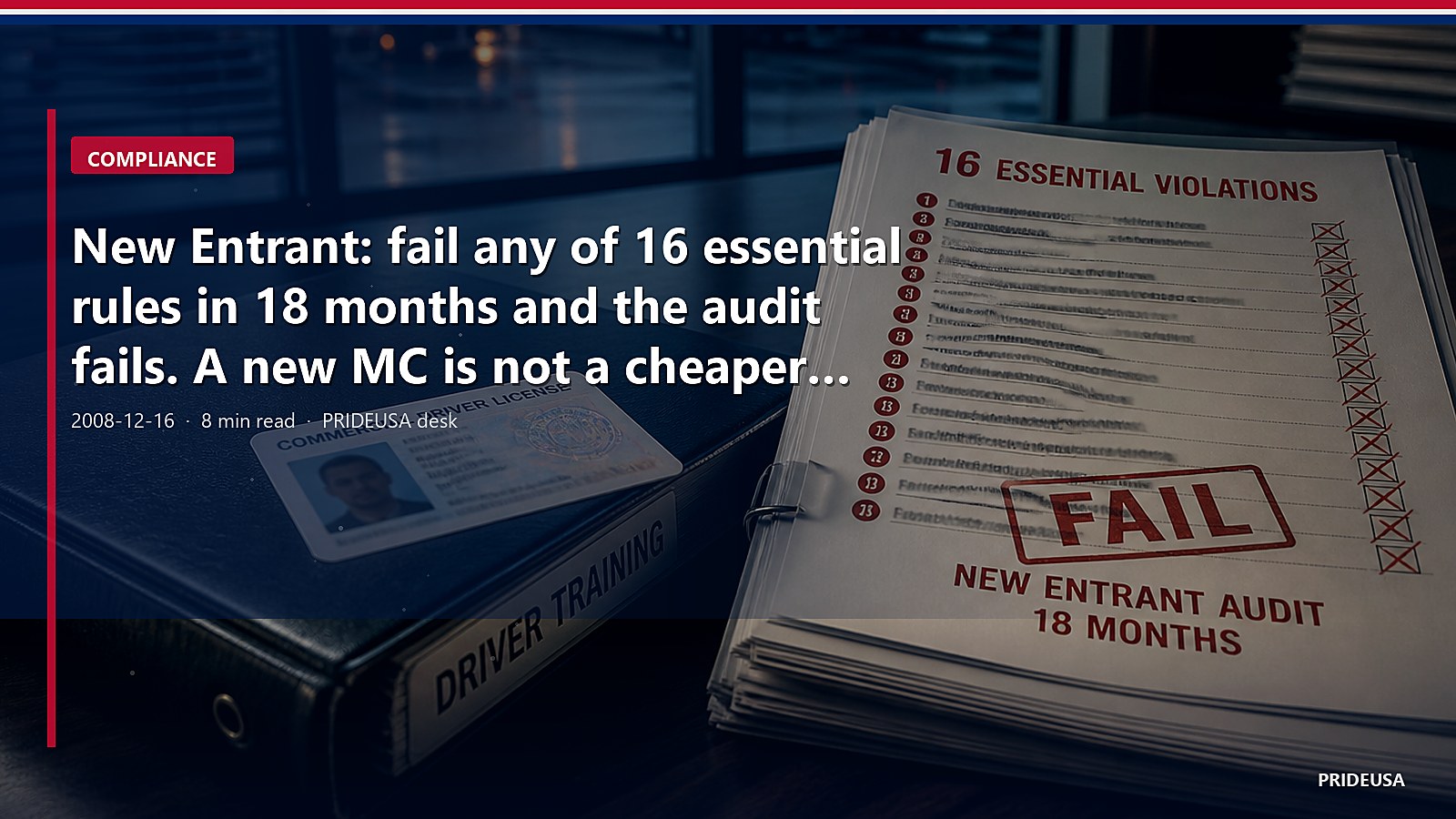
During 18 months of New Entrant monitoring, any one of 16 essential violations fails the audit; a flash MC is still not a cheaper PRIDEUSA quote.
The Large Truck Crash Causation Study found driver action or inaction as the critical reason in 88 percent of sampled crashes; weather was rarely the villain.
Prior employers have 30 days to answer a three-year safety-performance history; Clearinghouse did not repeal 391.23, and we still send the form.
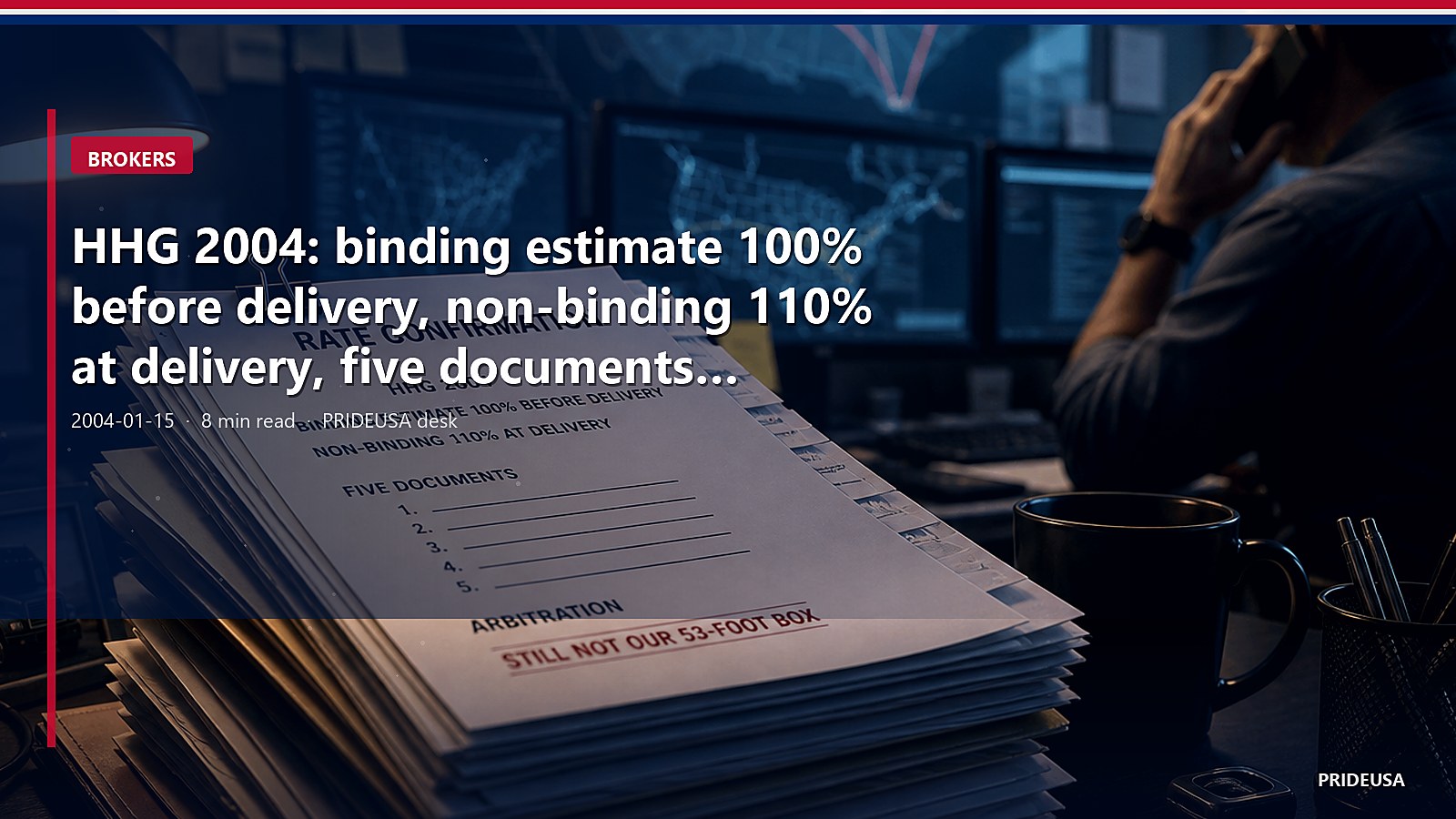
The 2004 household-goods rule locked binding estimates at 100 percent before delivery and non-binding at 110 percent at the curb; still not our 53-foot box.
The 2003 ELDT proposal asked about 10.5 hours on qualifications, hours, wellness, and whistleblower rights — the ancestor, not the 2022 TPR.
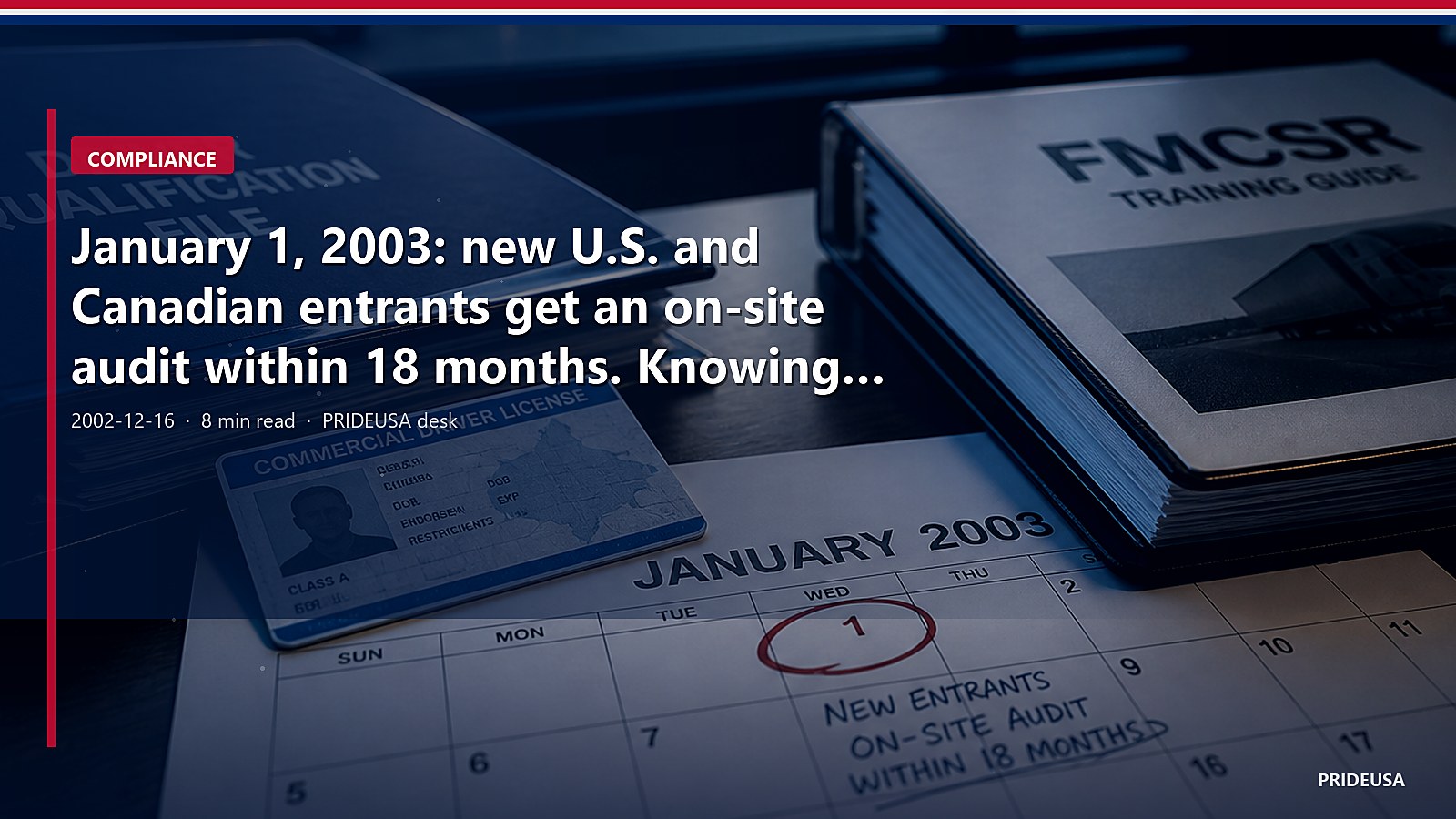
Starting January 1, 2003, new U.S. and Canadian entrants faced an on-site audit within 18 months; knowing the rules is the price of a USDOT number.
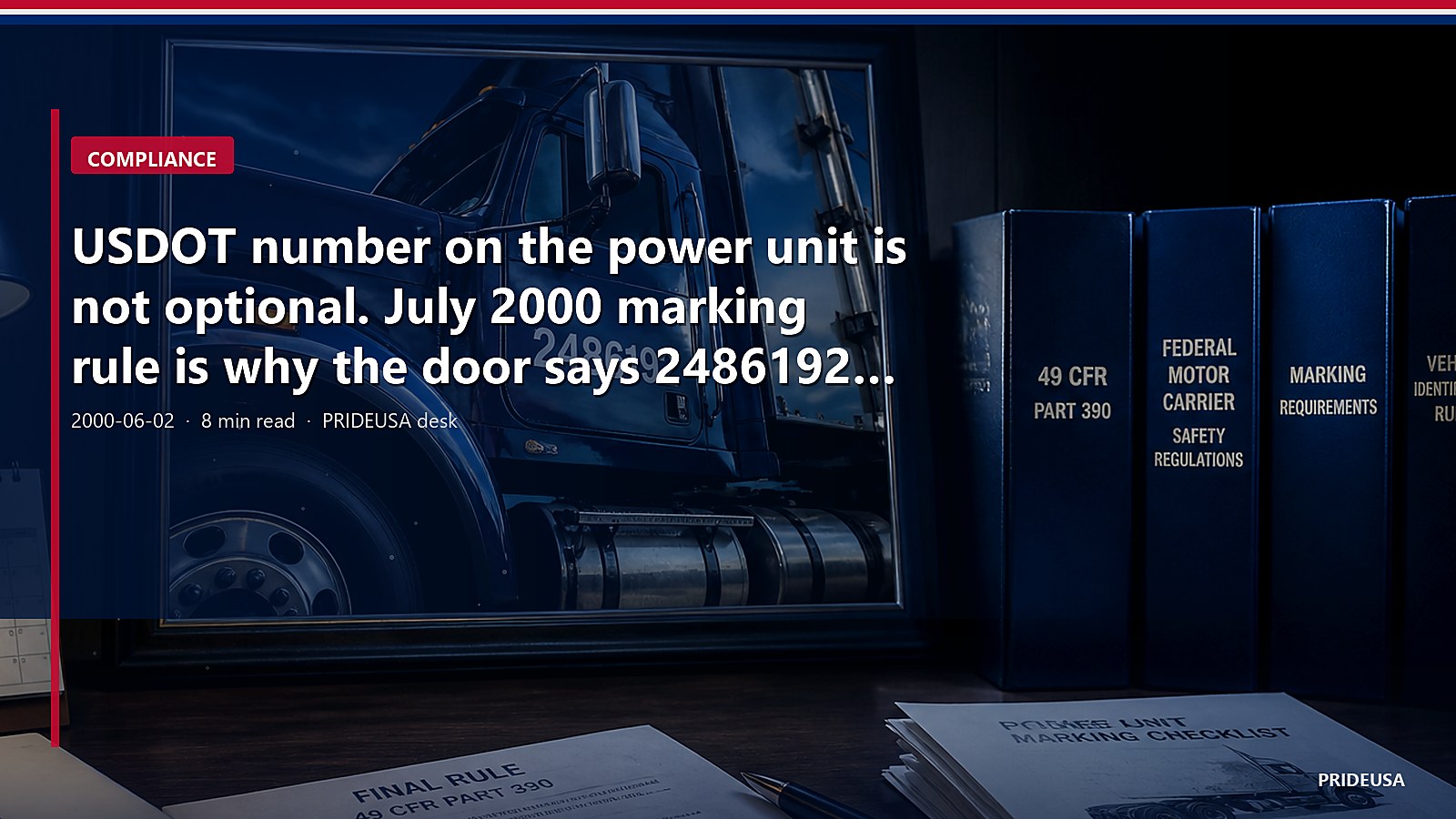
The July 2000 marking rule put the USDOT number on the power unit before it rolls; our door says 2486192 because that is the identification rule.
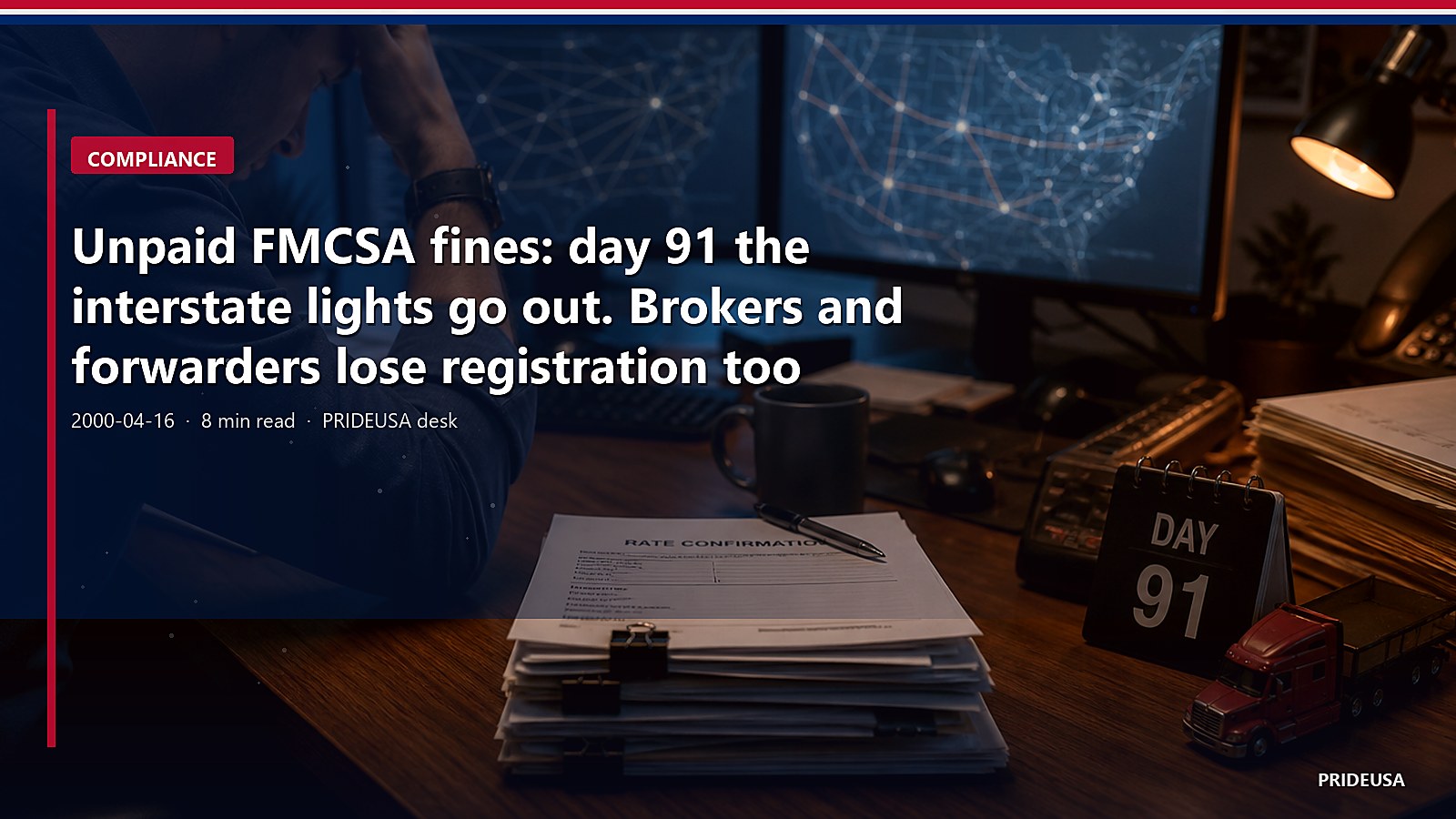
Skip an FMCSA civil penalty and on day 91 interstate commerce can stop; brokers and freight forwarders can lose their operating registration too.